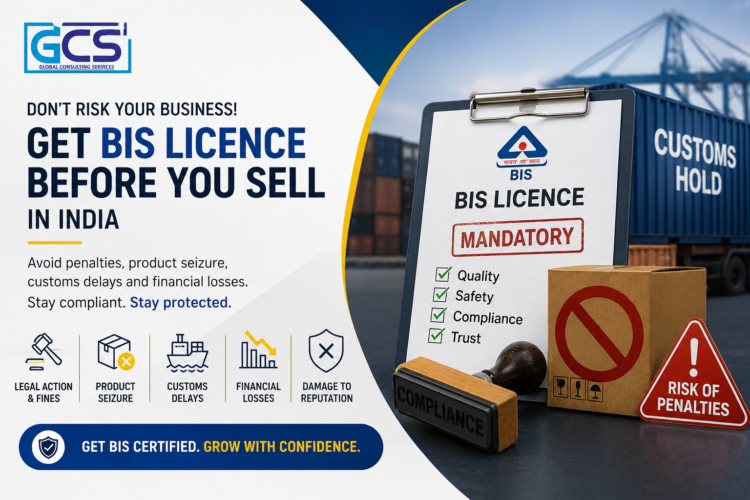
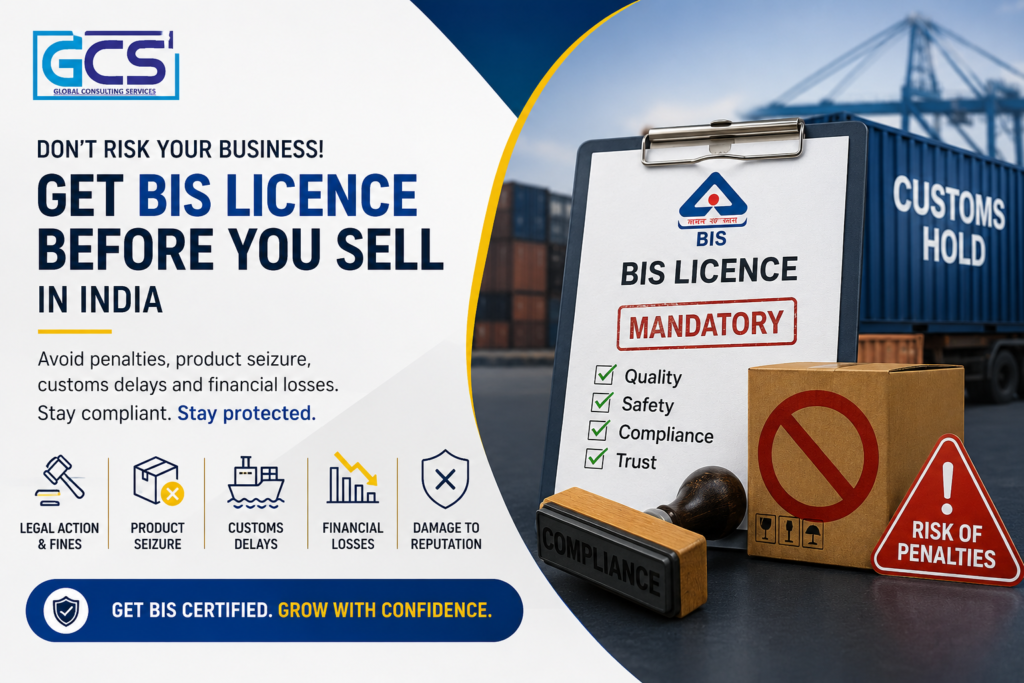
In India, following the rules is very important for businesses. If your product needs to meet standards set by the Bureau of Indian Standards or BIS and you sell or import it without getting the required approval, you can get into serious trouble. Many businesses think that getting a BIS certification is a formality, but it actually affects whether your products can be sold in India or not.
A BIS licence or registration shows that your product meets the quality and safety standards set by the government. Without it, your business may face fines, problems with customs, seized goods, lost sales opportunities, and damage to your brand’s reputation. For people who make things, import goods, and own brands, not following BIS rules can be a costly mistake.
What is BIS? Why is it Important?
The Bureau of Indian Standards is the organization in charge of setting standards in India. It makes sure products are safe and of quality through various certification schemes. Depending on the type of product, businesses may need to get BIS certification through schemes like ISI Marking, Compulsory Registration Scheme, or the Foreign Manufacturers Certification Scheme.
BIS certification is required for many products sold in India, including electronics, electrical appliances, steel products, cement, toys, helmets, chemicals, and more. These rules are made to protect consumers and ensure that products in the market are of quality.
If your product needs BIS certification and you sell it without getting the approval, it is considered non-compliance under Indian law. This can lead to problems both immediate and long-term.
1. Legal Action and Fines
One of the serious consequences of not getting a BIS licence is legal action. Selling, making, storing, distributing, or importing products that require BIS certification without approval is against the law.
This can lead to:
- Fines
- Legal notices from authorities
- Prosecution under laws
- Criminal proceedings in repeated cases
Many business owners think that non-compliance is a minor issue, but the government takes it very seriously. If your products are found in the market without BIS approval, the matter can become serious quickly. The costs, time, and disruption to your business that follow can be much greater than the cost of getting the licence in the first place.
2. Product Seizure and Sales Ban
A product that needs BIS certification but does not have it can be seized by the authorities. This is not just a possibility — it can actually happen. If someone complains or an inspection is done, the authorities can take away the non-compliant goods and stop sales immediately.
This can result in:
- Seizure of inventory
- Removal of products from shops or warehouses
- Suspension of sales
- Ban on selling the product in the market
For a business, this can be very damaging. Imagine you have already spent money on making, packaging, transporting, marketing, and distributing your products. If your products are suddenly stopped from being sold, all that investment is wasted. It also affects the confidence of your dealers and creates problems across your supply chain.
3. Customs Delays and Import Restrictions
For importers and foreign manufacturers, BIS compliance is especially important. If you bring goods into India without the required BIS licence or registration, customs authorities may hold the shipment at the port.
This can lead to:
- Delayed customs clearance
- Shipment detention
- Rejection of imported goods
- Return of goods to the supplier
- Destruction of goods in some cases
- Additional charges for storage and warehousing
This is one of the reasons importers should check BIS requirements before shipping products to India. A product that is not BIS compliant may never enter the market. That means your money remains stuck in stock, shipping, and port charges with no return on investment.
For example, if an importer sends goods to India without valid BIS registration, customs may refuse to clear the shipment. That one mistake can delay a launch, disappoint distributors, and create financial losses.
4. Loss of Business Opportunities
Today, BIS certification is not only about following the law, it is also about getting access to the market. Many large buyers, government bodies, institutions, and online marketplaces require BIS-compliant products.
Without BIS approval, you may lose access to:
- Government contracts
- Corporate procurement contracts
- Large distributors
- E-commerce marketplaces
- Institutional buyers
This automatically reduces your business opportunities. If your competitors have certification and you do not, buyers are more likely to trust and choose them. In many industries, compliance is no longer optional if you want to grow and compete seriously in India.
5. Damage to Brand Reputation
Trust is one of the biggest assets for any brand. When a product is found to be non-compliant, it raises doubts about safety, quality, and reliability. Customers, dealers, and business partners may begin to question the credibility of your brand.
Non-compliance can damage your reputation by:
- Reducing customer confidence
- Creating negative market perception
- Weakening relationships with distributors
- Making your business look careless or unreliable
This can be especially harmful for businesses that want to build a long-term presence in India. A damaged reputation is not easy to repair. Even if the certification issue is later resolved, customers may still remember that your brand sold products without meeting standards.
6. Financial Losses Beyond Fines
The financial impact of not getting a BIS licence goes beyond paying a fine. In many cases, businesses end up losing much more through blocked inventory, delayed launches, repeated testing, and legal procedures.
Common financial losses include:
- Unsold or seized stock
- Retesting and recertification costs
- Relabeling expenses
- Storage and logistics charges
- Legal and professional fees
- Compensation to customers
- Lost revenue due to stopped sales
For small and medium businesses, these losses can be especially difficult to absorb. One compliance failure can disturb cash flow and affect overall business operations.
7. Risk of Product Recall
If your product has already entered the market and is later found to be non-compliant, the authorities may order a recall. A product recall is one of the most damaging outcomes because it affects both finances and public image.
A recall may involve:
- Taking products back from dealers and customers
- Issuing public notices
- Offering refunds or replacements
- Facing compensation claims
- Going through regulatory scrutiny
Recalls are expensive, time-consuming, and highly visible. They can create panic among retailers and serious doubt among buyers. In some sectors, a recall can permanently affect customer trust.
Why Businesses Should Treat BIS as a Priority
Many companies make the mistake of treating BIS compliance as something to be handled later after product launch or import. That approach is risky. BIS certification should be part of your business planning from the beginning.
A valid BIS licence can help you:
- Sell legally in the market
- Avoid customs issues
- Build customer trust
- Improve brand credibility
- Access larger business opportunities
- Protect your long-term growth
In simple terms, BIS certification is not just about following the law, it is also about creating a strong, secure, and professional foundation for your business.
Final Thoughts
Not getting a BIS licence in India is not a small issue — it is a serious business risk. The consequences can include penalties, product seizure, customs delays, market bans, financial losses, product recalls, and damage to your brand reputation.
If your product category requires BIS certification, the best approach is to complete the process before manufacturing, importing, or selling in India. Taking action early can protect your business from disruption and help you grow with confidence in a highly regulated and competitive market.