Take a look around your home or office. You will probably find a smartphone in a drawer, a laptop that does not work anymore or a charger you do not remember you had. We replace devices very often and rarely think about what happens to the old ones.
Now imagine this on a scale.
India is one of the worlds growing consumers of electronic products. This means India generates a lot of e-waste every year. While technology makes life easier it also creates a growing challenge. Electronic waste has metals that can be recovered. However it also has substances that can contaminate soil and water if not handled responsibly.
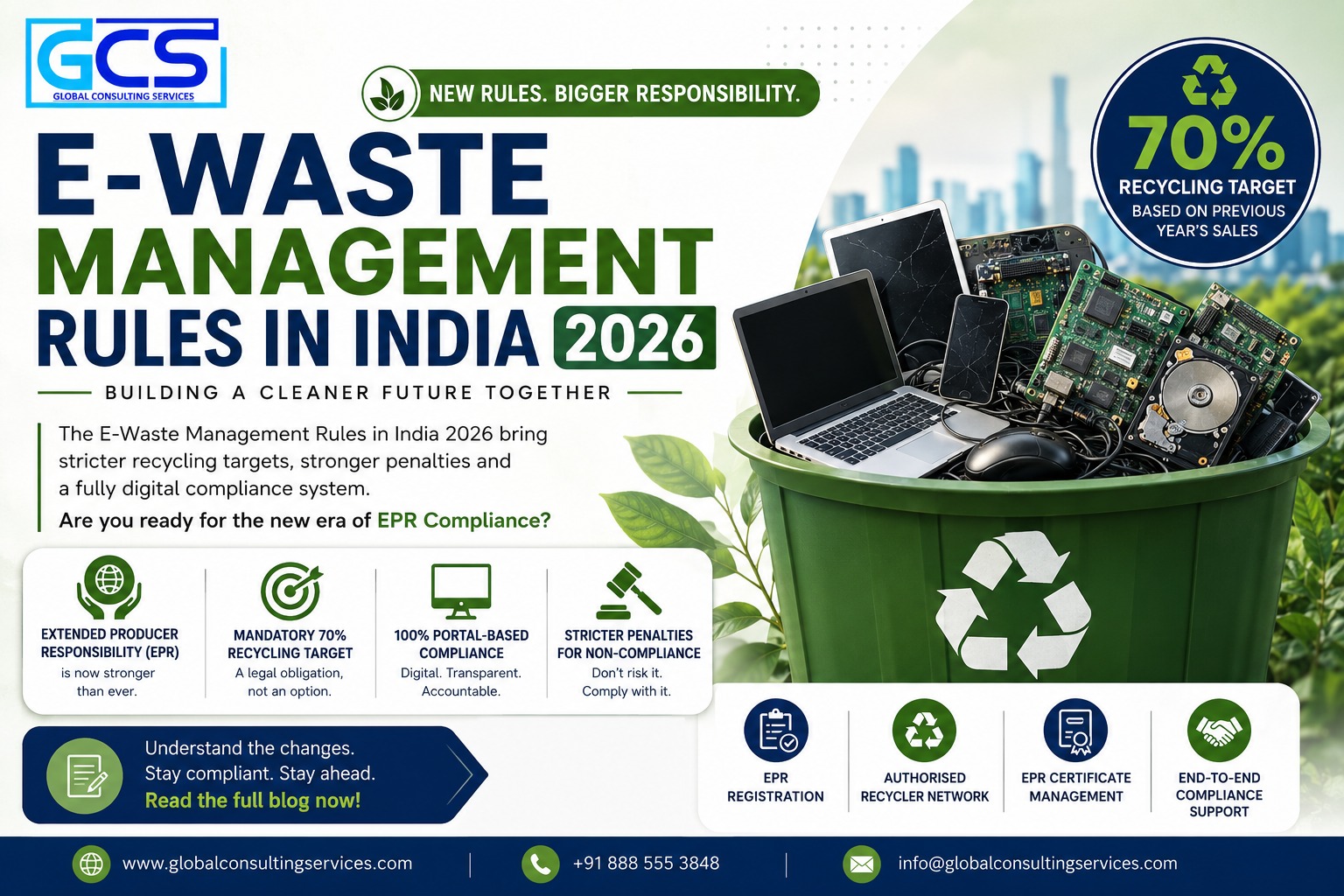
The Government of India has made new rules called the E-Waste Management Rules in India 2026. These rules are a change in how manufacturers, importers and brand owners manage the products they sell.
The focus is now on Extended Producer Responsibility (EPR), stricter recycling obligations, digital compliance and stronger enforcement. One of the changes is the mandatory 70% recycling target. This target is calculated based on a producers years sales.
If your business manufactures, imports or sells products in India you must comply with these rules.
Why India Needed Stronger E-Waste Regulations
The electronics industry has grown fast over the last decade. Smartphones, smart TVs, laptops and other gadgets have become part of life.
Every new device eventually becomes waste.
The problem is not the volume of discarded electronics. It is also how they are disposed of. Informal recycling practices often involve burning wires and releasing materials into the environment.
The updated E-Waste Management Rules in India 2026 aim to address this issue. The goal is to ensure that electronic waste is collected, channelized and recycled through facilities.
It is a move that supports protection and encourages a circular economy. In an economy valuable materials are recovered and reused.
What Is Extended Producer Responsibility (EPR)?
Extended Producer Responsibility (EPR) is a concept.
Earlier a manufacturers responsibility ended once a product was sold. Today that is no longer enough.
Under EPR producers are expected to take responsibility for what happens after the product reaches the end of its life.
This means manufacturers and importers must ensure that electronic waste generated from their products is collected and recycled through recyclers.
The 70% Recycling Target: The Biggest Change Businesses Need to Prepare For
The rules require manufacturers to achieve a 70% recycling target. This target is calculated based on the quantity of products sold during the financial year.
For example if your company sold 50,000 laptops year you must ensure that electronic waste corresponding to the prescribed recycling obligation is processed through authorized recyclers.
This is not a recommendation or a best practice. It is an obligation.
Is Your Business Covered Under These Rules?
The rules apply to categories of businesses involved in the electronics supply chain. These include:
- Manufacturers of electrical equipment
- Importers bringing products into India
- Brand owners selling electronic products under their own name
- Producers placing notified equipment in the Indian market
Compliance Has Gone Digital
The new framework has a complete shift toward a portal-based compliance system.
Businesses are expected to manage their compliance through the designated online portal. This includes registration, reporting, maintaining records tracking recycling obligations and managing EPR certificates.
What Happens If You Ignore the Rules?
Ignoring the rules can prove expensive.
The E-Waste Management Rules in India 2026 include stricter enforcement mechanisms. Failure to meet EPR obligations may result in:
- Environmental compensation charges
- Penalties
- Suspension or cancellation of registrations
- Regulatory action by the concerned authorities
Compliance Isn’t Just About Avoiding Penalties
While legal compliance is important there are several business advantages as well.
Companies that actively manage e-waste often build relationships with customers, investors and business partners who value sustainability.
Responsible recycling also helps recover raw materials. This reduces dependence on resources and supports a circular economy.
How Businesses Can Stay Ahead
Meeting recycling targets becomes much easier when compliance is treated as a process.
Businesses should begin by understanding which products fall under the regulations. They should ensure they are registered through the compliance system.
Working with authorized recyclers maintaining proper documentation regularly monitoring recycling obligations and keeping accurate sales records are all essential steps toward smooth compliance.
How Global Consulting Services Can Support Your EPR Journey
Global Consulting Services (GCS) can help manufacturers, importers and brand owners simplify EPR compliance.
Our experts provide end-to-end assistance. This includes understanding requirements and documentation to registration support, compliance management and ongoing guidance.
Final Thoughts
The E-Waste Management Rules in India 2026 reflect Indias growing commitment to development and responsible resource management.
By introducing Extended Producer Responsibility (EPR), mandatory 70% recycling targets, stricter penalties and a digital compliance system the government is encouraging businesses to take ownership of the environmental impact of their products.
For manufacturers and importers this is the time to strengthen compliance strategies.
Businesses that embrace these changes today will not stay on the right side of the law but also build a stronger reputation, as responsible and sustainable organizations.
Frequently Asked Questions (FAQs)
1. What are the E-Waste Management Rules in India 2026?
The E-Waste Management Rules in India 2026 are government regulations that require manufacturers, importers, producers and brand owners to ensure proper collection, recycling and environmentally sound disposal of electronic waste through the Extended Producer Responsibility (EPR) framework.
2. What is Extended Producer Responsibility (EPR) in e-waste management?
Extended Producer Responsibility (EPR) is a policy that makes producers responsible for managing electronic products even after they reach the end of their life cycle. Producers must ensure that eligible e-waste is collected and recycled through authorized recyclers.
3. Who needs EPR registration for e-waste in India?
EPR registration is generally required for manufacturers, importers, producers and brand owners who introduce notified electrical and electronic equipment into the Indian market.
4. What is the 70% recycling target under the new e-waste rules?
The new rules require eligible producers to achieve a 70% recycling target based on the prescribed recycling obligation calculated from their product sales during the applicable financial year.
5. Is EPR registration mandatory for importers of electronic products?
Yes. Importers bringing notified electronic products into India are required to comply with the applicable EPR provisions and complete the required registration and compliance procedures.
6. What happens if a company does not comply with the E-Waste Management Rules?
Non-compliance may result in environmental compensation charges, penalties, suspension or cancellation of registrations and other regulatory actions by the concerned authorities.
7. How can businesses comply with the E-Waste Management Rules in India?
Businesses should identify applicable products, complete the required registration, maintain accurate records, work with authorized recyclers, monitor recycling obligations and comply with reporting requirements through the designated compliance portal.
8. Why is e-waste recycling important for businesses?
Proper e-waste recycling helps businesses comply with regulations, recover valuable materials, reduce environmental impact, support a circular economy and strengthen their reputation for sustainability.
9. Can Global Consulting Services help with EPR compliance?
Yes. Global Consulting Services (GCS) provides end-to-end assistance for EPR compliance, including documentation support, registration assistance, compliance management and ongoing regulatory guidance.
10. Which electronic products are covered under EPR compliance?
The rules apply to notified electrical and electronic equipment covered under the E-Waste Management Rules. Businesses should verify whether their products fall within the applicable categories before placing them on the Indian market.