The Ministry of Commerce and Industry has issued the Furniture Quality Control Second Amendment Order, 2026.
This order revises the Furniture Quality Control Order, 2025.
That order mandated BIS certification for specified furniture products from 13 February 2026.
The latest update brings relief to importers by introducing transitional exemptions.
This means shipments already ordered or in transit before enforcement are not unfairly penalized.
This move shows the government wants to balance quality compliance with practical business realities.
Background: BIS Certification on Furniture
The Indian government made it compulsory for furniture products to comply with Indian Standards and obtain certification from the Bureau of Indian Standards before being sold or imported into India.
This regulation was introduced to ensure product safety and durability.
It also aims to eliminate unsafe imports.
The goal is to promote quality manufacturing practices and create a level playing field for manufacturers.
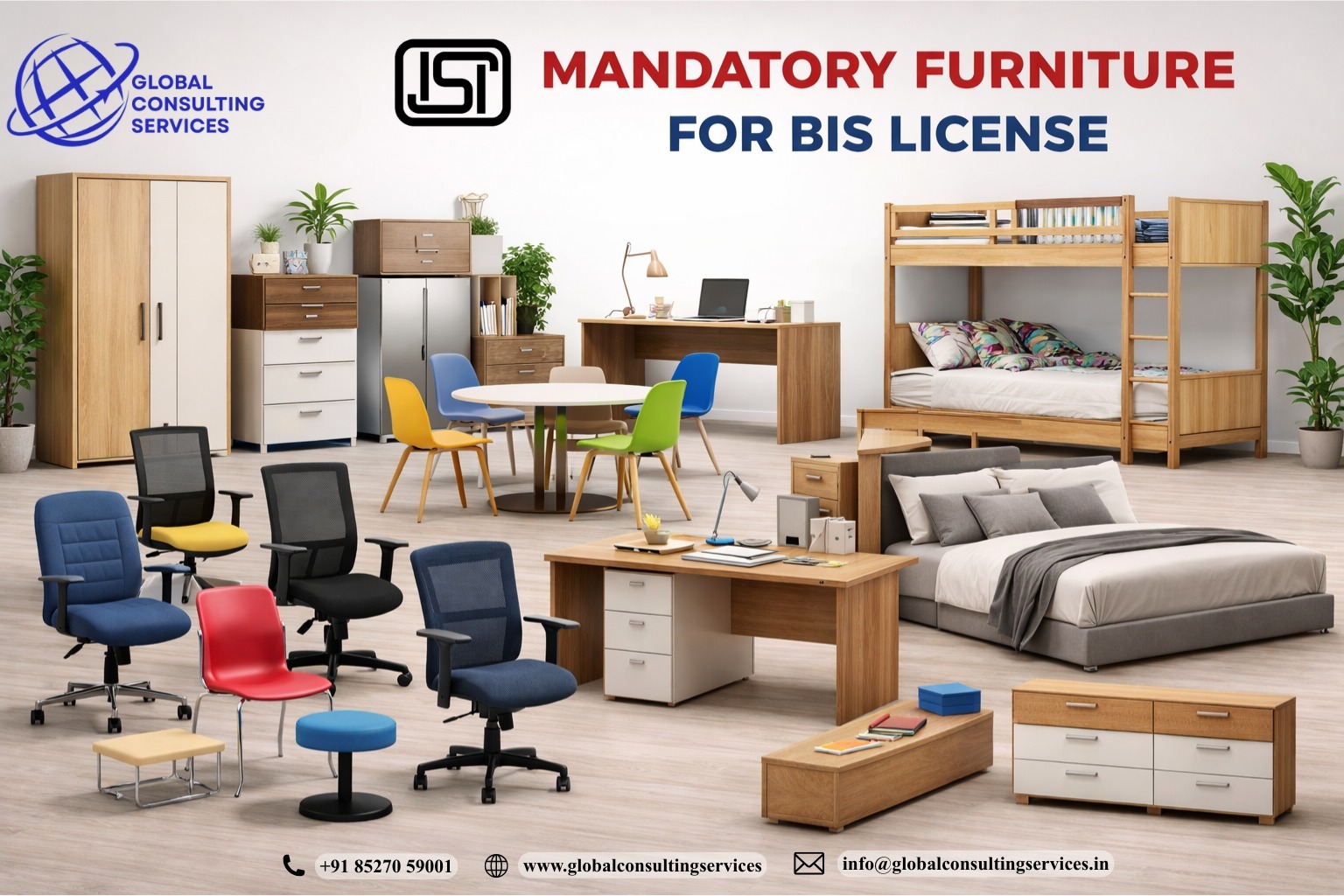
The Quality Control Order applies to a range of furniture products.
These include:
- Work Chairs
- General Purpose Chairs and Stools
- Tables and Desks
- Storage Units
- Beds
- Bunk Beds
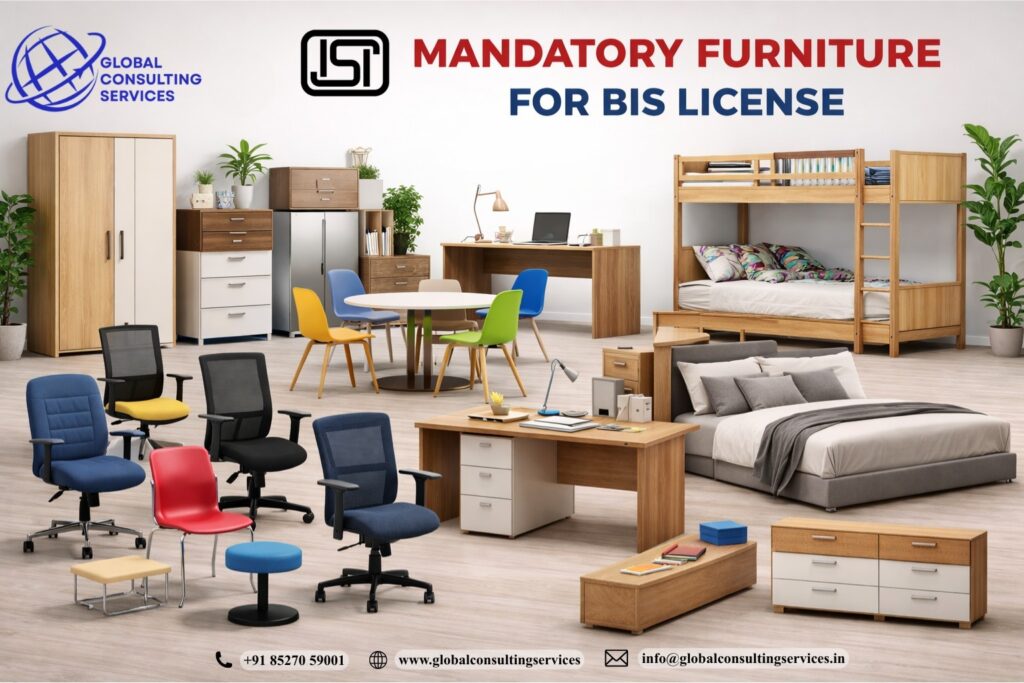
All these products must carry the ISI mark.
This mark confirms compliance with BIS standards before entering the market.
What the Second Amendment Order Changes
The Second Amendment introduces two provisions.
These provisions address import consignments in the supply chain prior to the Quality Control Order’s enforcement.
This was a needed intervention.
Many importers had already committed to international orders months in advance.
They could not comply instantly with the BIS requirements.
1. Exemption for Goods Shipped Before Implementation
The amendment clearly states that the Quality Control Order will not apply to imported furniture if the shipment was dispatched before 13 February 2026.
The Bill of Entry must be filed within 180 days from the date of implementation.
This clause ensures that goods in transit are not subjected to sudden regulatory barriers.
Without this exemption, shipments would have been held at ports.
Importers would face demurrage charges and losses.
Supply chains would experience disruptions.
2. Exemption for Purchase Orders Placed Before Implementation
The amendment also protects importers who had already legally placed orders before the regulation came into effect.
This exemption applies where the Purchase Order was issued before 13 February 2026.
The Bill of Lading and Bill of Entry must be completed within the 180-day transition period.
This ensures that businesses are not penalized for long manufacturing lead times or international supplier commitments.
Mandatory Documentation Requirement
To claim the exemption under the amendment, importers must comply with documentation requirements.
Documents to be submitted include:
- Copy of Purchase Order
- Bill of Lading
- Bill of Entry
- Any additional supporting documents
These documents must be submitted to BIS within 7 days of customs clearance.
They should be on the importer’s letterhead and signed by an authorized signatory.
Why This Amendment Was Necessary
The introduction of BIS certification was a significant regulatory shift.
However, its immediate enforcement created challenges.
Without this amendment, goods already shipped would have been stuck at ports.
Importers could incur financial losses.
Retailers might face inventory shortages.
Ongoing projects relying on imported furniture could be delayed.
The government introduced a 180-day transition window to ensure a shift toward compliance.
Current Compliance Timeline
After incorporating all updates, the compliance structure is as follows:
- Large and Medium Enterprises: BIS certification from 13 February 2026
- Micro and Small Enterprises: Extended deadline until 13 August 2026
- Pre-shipment or Pre-PO Imports: Allowed for 180 days from implementation (subject to documentation)
Key Takeaway
The transition period is temporary.
Once it expires, no exemptions will be available.
Full compliance will be mandatory for all imports.
Impact on Importers, Manufacturers and Retailers
Importers gain short-term relief through exemptions.
They must fast-track BIS certification for shipments.
Domestic manufacturers benefit from competition from non-compliant imports.
Retailers must verify that inventory complies with BIS norms.
What Importers and Businesses Should Do Now
To avoid disruptions and penalties, businesses should take steps:
- Audit existing shipments and check shipment dates and purchase order timelines.
- Verify documentation and ensure accuracy in Bill of Lading and Bill of Entry.
- Prepare for BIS certification. Initiate certification for future imports.
- Submit declarations on time. File required documents within 7 days.
- Align supply chain. Work closely with international suppliers.
Risks After the Transition Window
Once the 180-day window ends, non-compliance will lead to consequences.
Customs clearance rejection, seizure or return of goods, and financial penalties are possible.
Business disruption is also a risk.
Therefore, relying on exemptions is not a long-term strategy.
Businesses must transition toward regulatory compliance.
The Furniture Quality Control Second Amendment Order 2026 is a timed and industry-friendly reform.
It ensures a transition toward mandatory BIS compliance.
It addresses the concerns of importers by protecting shipments in transit and honoring pre-existing purchase commitments.
It prevents financial losses.
At the same time, it reinforces India’s commitment to quality assurance, consumer safety, and standardization.
However, this relief is temporary.
Businesses must act quickly to align with BIS requirements and avoid disruptions.
The message is clear: use this transition period wisely because full compliance is not optional, it’s inevitable.